
Adjustable Saw Horse Extended

Now available for sale, Adjustable Saw Horse CAD drawings, specifications, and parts list!

These sawhorses are portable, rugged and fully adjustable. They are great for filming video when an elevated track is required for dolly shots. The adjustable sawhorses have been tested in many different environments and have always performed extremely well. An advantage of this design is that they have the ability to break down, which means they take up less space when not in use and while in-transit. Another nice feature is the adjustability of the design, which allows you to set up a level track even if the ground you are working on is slanted or uneven.

What is included?

  • 15 CAD drawings in PDF format
  • Specification for components
  • Exploded view video for easy assembly

Price: $8.99

Available for download immediately after you purchase.


2012 Reader's Choice Awards

2012 Reader’s Choice Winner!

Each year MinnLocal.com and Minnesota Sun Newspapers conduct a reader’s choice poll giving consumers a voice to show which community businesses they felt performed the best during that year.

Readers submit nominations for this award, and a 3rd party totals the results. Everything ranging from restaurants to doctors is evaluated in this poll.  Needless to say, when I found out my company was rated the best cabinetmaker, I was thrilled!

Award Winners

Best Cabinet Company

Shot entirely in one week, in and around Lake Powell using DIY video & time-lapse dollies.

A little over a year ago, I was approached by my friend Josh Van Patter to build him a dolly for shooting time-lapse video.  This is now the second version of the original time-lapse dolly.  The overall concept is more or less the same.  The main difference is that the new design is propelled using a winch instead of a high-friction foam wheel.

The downside to the old design was that the pipe tracks had to be almost perfectly level or the foam wheel would tend to slip under its own weight.  The winch corrects this problem and, as an added bonus, gives the dolly the ability to climb.

I designed the winch to be removable so that it could be interchanged between multiple dollies, each designed for different applications.

I have four different gear motors that we use with this dolly for controlling the speed.  For time-lapse, we use both a 1rpm and 2rpm gear motor.  For long track shots and filming in real time, I also have a 4rpm, 6rpm and 10rpm.  All the motors are geared with a 24-tooth, 48-pitch brass pinion gear.  The larger aluminum gear that is mounted directly to the hub of the winch has 203 teeth. Like this Dolly? Buy one Now.

In addition to the new and improved version of the original time-lapse dolly, I also created a compact travel-size dolly.  Both systems utilize the same electronic wench, which can be interchanged to reduce cost.

The compact dolly is really simple; it’s essentially just a drawer box.  The drawer slides I use are under mount, full extension ball bearing slides with soft close.   They are the same drawer slides I use in high-end kitchens.  When the slides are fully extended, the winch pulls the drawer closed giving you roughly 18 inches of movement. 

The next phase of this project is making the dolly programmable.  This will allow us to shoot multi-day time-lapses and also give us the ability to throttle the speed.  Peter Kirwin is the brains behind this add-on.  We will be coming out with a post on this as soon as it’s ready.  If you want to stay in the loop, subscribe to my blog or hit me up on Twitter.

Behind the Scenes w/ Josh Van Patter

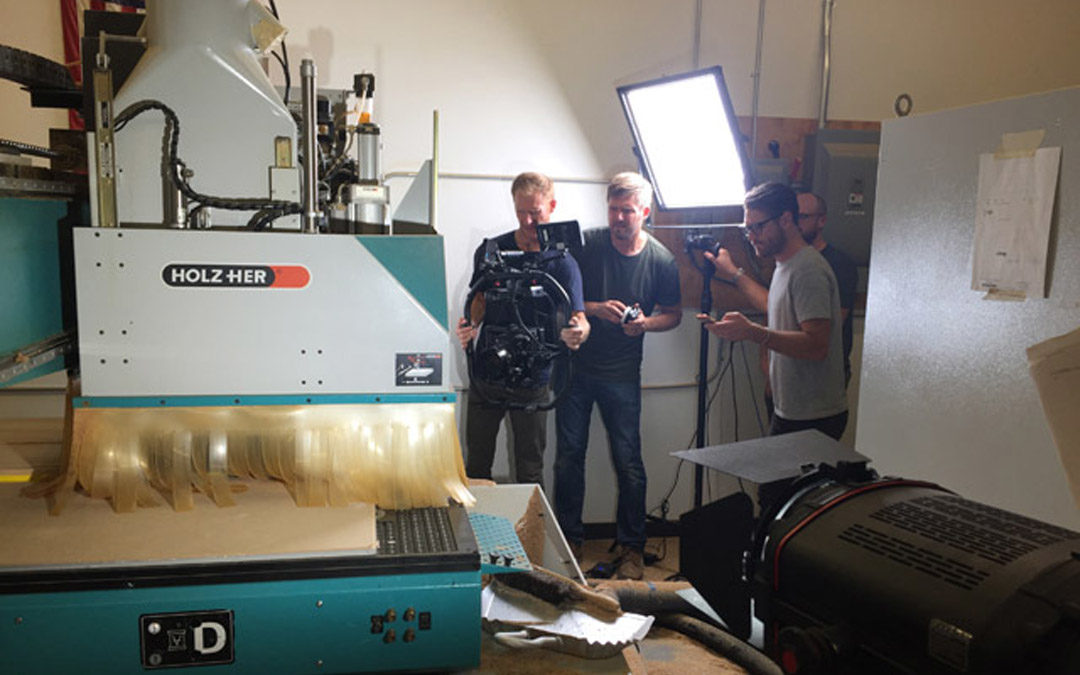
This video gives a quick preview of the gear we used to film FADE.


Order this Time-Lapse Dolly

make a time lapse dolly

Order this fully assembled time-lapse dolly for just $599.
Ships in 2-3 weeks.

Includes:

  • 12V battery
  • 1 rpm Gear Motor
  • 24-tooth pinion gear
  • 203-tooth aluminum hub gear
  • 18 inches of movement
  • 2 rugged nylon handles

Comes ready to shoot. Measuring 11” wide x 19” long x 4” tall, this compact travel dolly fits in most carry on suitcases.

Price: $599.00, plus $29 shipping on orders within the continental US.

Note: Does not include camera mount or battery charger. 

Furniture Design Sketch

This is a short clip my buddy Josh Van Patter and I filmed this afternoon.  We had two cameras rolling, a Canon 7D and Canon T2i.  Both cameras were shooting still frame images triggered by a remote timer every 30 seconds.

On a custom mount I made in the shop, I mounted the T2i directly above the drawing shooting straight down at the paper.   The 7D was mounted to a new-and-improved time-lapse dolly prototype.  As soon as I get the new design painted, I’ll do a post on it similar to the one I wrote for the original Time-lapse Dolly.

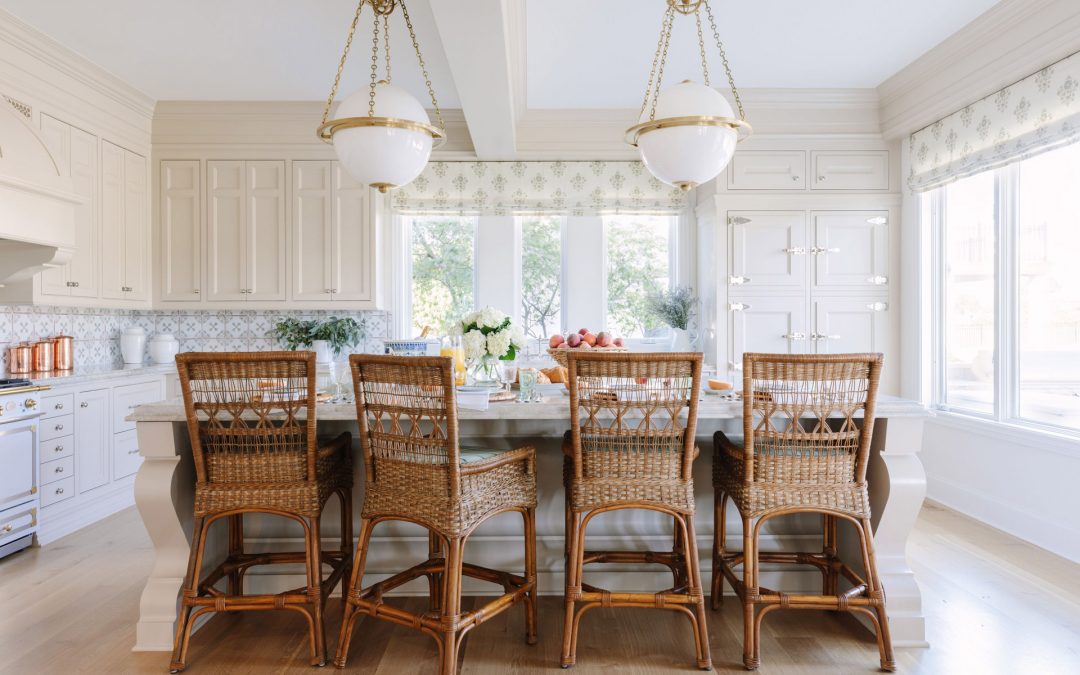
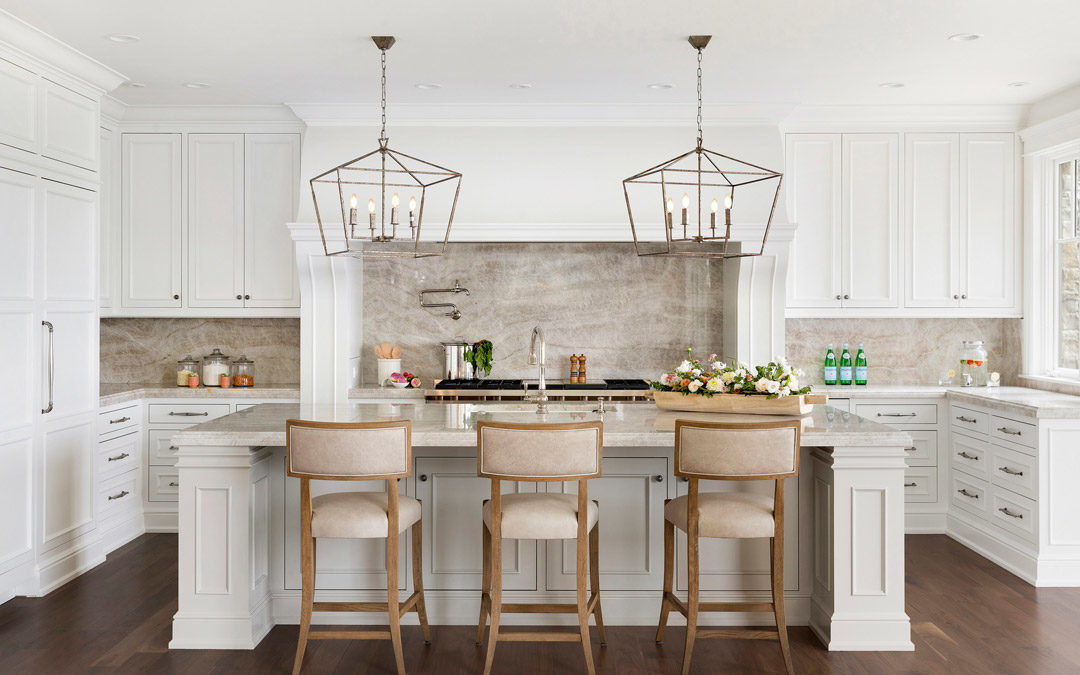
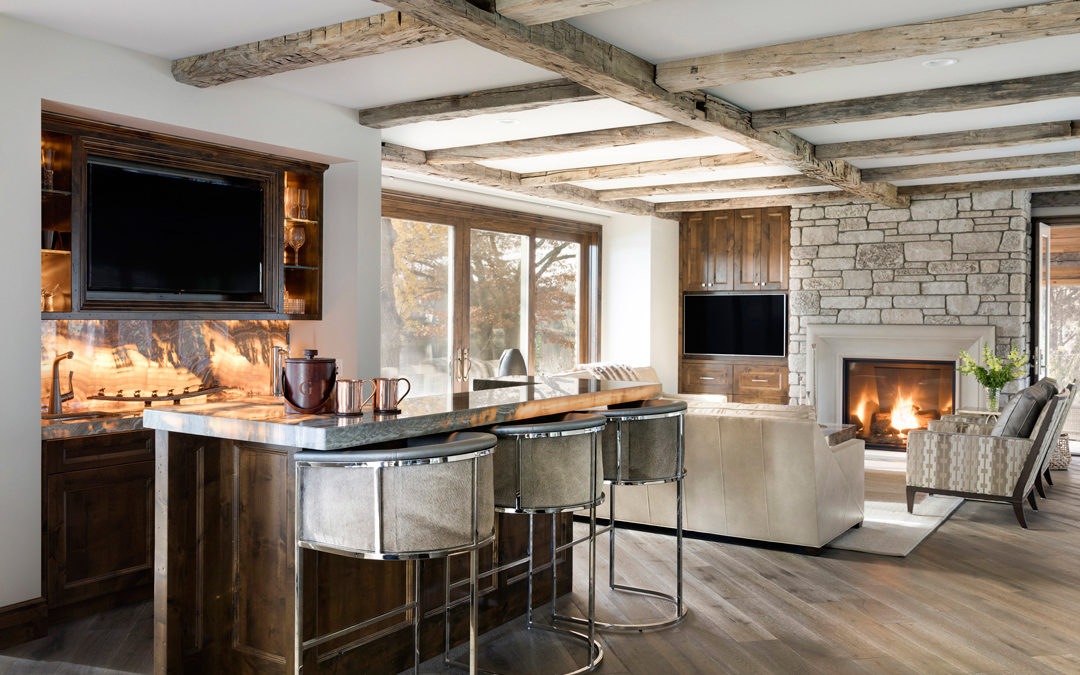
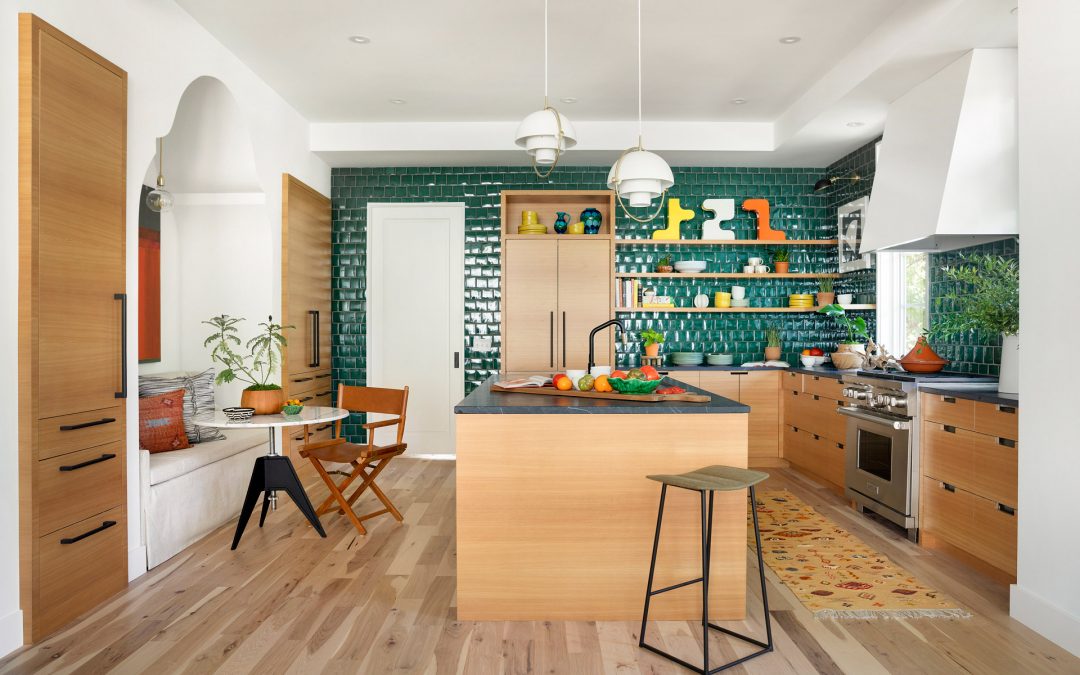
More images of the completed fitted furniture kitchen can be viewed in the Custom Kitchens Services page.

We’ll probably use this shot in the intro section of my upcoming demo reel.  I’m really happy to be able to check this time-lapse off of my list of things-to-do in 2011!

Click on the images below to enlarge them.


About the cabinet:

The veneering on the tabletop is a Chevron pattern.  Some people refer to this design as a French Herringbone.  This particular style looks awesome on hardwood floors.

For this project, I used Curly Figured American Walnut that I got from Certainly Wood.  The quality of their veneers is excellent.  I highly recommend them.

The finish I used is an oil-based varnish.  The thing that I really like about varnish is that it tends to amber significantly in the first few months; which adds a lot of warmth to the strong character of the wood.

The hardware was hand-made out of brass and leather.  The brass was finished to look antique.  A great place to find hardware like this in the Twin Cities is Nob Hill.


About the video:

This is a 30 second HDR time-lapse that I filmed over the course of 23.5 hours.  I mounted a Canon T2i on a custom-made ceiling mount directly above my workbench, and shot still images on a remote timer every minute for the entire process.

I bought a Tokina 10-17 f3.5-4.5 Fish Eye lens special for this particular shot, and I’m really glad I did.  I love the way this lens bends the light and captures almost the whole shop.

I also used a Canon AC Adapter Kit for Rebel T2i.  An advantage to having it plugged into a cord is that you are not moving the camera at all.  Even a slight bump will show up in the final shot if you’re not careful.

This footage will be going into my upcoming demo reel when it’s complete.  I can’t wait to finish this project; hopefully I’ll have all the shots I need by the end of the year!


This is a 3.5 minute YouTube video I filmed and edited on the technique I use for painting furniture to look old. It rips through the process pretty fast, but I think it shows everything that it needs to.

Take a look and let me know what you think, any feedback is appreciated.

Tools you’ll need:
  • propane torch
  • rat-tail file
  • liquid hide glue
  • disposable brush
  • softball size rock
  • old dull chisel
  • paint scraper
  • wire brush
Step # 1. Distressing

As furniture ages, the sharp details and edges are usually the first to wear.  I start by softening all the sharp edges using a rat-tail file.  Chip a corner or two using an old dull chisel.  I like to add dents using a softball size rock.  It’s important to rotate the rock as you strike the project because you do not want all the dents to have the same size and shape.

Next, alter the texture of the wood’s grain using heat and moisture. Doing this will rapidly change the cell structure of the wood, creating an aged look. Mist your project with water using a spray bottle.  After the water has absorbed, quickly evaporate the moisture using heat generated by a propane torch. A little char is ok on the edges, but try not to burn your project too much.

Go over the whole project with the wire brush to remove any burs and excess char.


Step # 2.  Apply penetrating stain

Oxidation causes wood to darken as it ages.  To simulate this color change, I apply an Early American oil-based penetrating stain.  Lambs wool pads works well for applying stain to larger projects; for small projects an old t-shirt or cotton rag works fine.  Have a cheap brush handy for getting into tight spaces and into the details of moldings.  After you have a section completely covered, wipe off the excess stain with a clean rag.   Allow the stain adequate time to dry before begin the next step.


Step # 3. Wax the edges

Using a household tea candle or paraffin wax, wax the edges.  This will make it easier to scrape down to the raw wood in step # 7.


Step # 4.  Paint the base color

Brush flat latex paint on for the base coat.  Choose a color that contrasts well with the top color. Let it fully dry.


Step # 5.  Apply crackle coat

Before you brush on the crackle coat, give the base color of a light scuff sanding to smooth out the surface.  In the video I used a store bought crackle coat, but normally I make my own using liquid hide glue thinned with a little warm water.  Apply the crackle coat using a cheap disposable brush. It’s important to apply this layer in the same direction, otherwise when your top coat starts to crackle, it will look fake.  Give the glue half an hour or so to dry.


Step # 6.  Paint the top color

Make sure to use a flat latex paint, semi-gloss will not crackle. The paint will begin to crackle almost immediately.  Work swiftly and do not brush over preceding strokes.  Doing so will fill in the cracks.  Allow the paint to dry overnight.


Step # 7.  Distress the top color

Once the paint is completely dry, using a paint scraper and sandpaper, hit the edges to remove the paint covering the spots you had previously waxed.  You can also sand through down into the previous layers on flat surfaces.  Rub the spots you distress with a damp rag to give the distressing a more realistic worn look.


Step # 8.  Apply the glaze (gel stain is the same thing)

Glazing altars the top color by darkening it, which creates an almost dirty look.  Apply the glaze with a cheap brush. Work the glaze into the cracks and recesses to create an instant patina, and then wipe off the excess with a clean rag. This technique will add emphasis to your distress marks.


Step # 9.  Brush or spray on shellac

Shellac seals in the preceding layers.  I apply two coats of Zinsser blonde shellac, sanding between coats with #0000 steel wool.


Step # 10.  Apply dark tinted wax.

After the final coat of shellac has fully dried, knock down the sheen by sanding with #0000 steel wool.  Finally, apply a dark tinted paste wax using a clean rag.


Arts and Crafts style vanity and linen cabinet

This is a small project I worked on for a bathroom remodel with BJ Larson Remodeling. I’ve never been a huge fan of this style of woodwork, but I really dig the way it turned out. The vanity and linen cabinet are made out of quarter sawn red oak. I’m not doing the finish work on this job, but if I did, I would use a gel stain top coated with amber shellac. I’ve used that finish before on this style of woodwork and it looks really sharp.

I filmed a time-lapse of myself installing the drawer boxes and drawer fronts and included it in my Spring 2011 “test footage” demo reel. If you look carefully, you’ll notice that I accidentally bumped the tracks when I was filming the time-lapse. I did a lot of work in post production trying to smooth it out but was unable to do so. My solution was to edit the “bump” to be on beat with the song. If you are a fan of the TV show Dexter, you might notice in the intro to the show they do the same thing with one of there macro shots. I wonder it it was intentional or an accident. Either way, I think Dexter’s intro is brilliant.

Spring 2011 video dolly test phase footage edited along with some old shots I worked on with Josh Van Patter (joshuavp.com).

3d hidden drawer mechanism clips by Mike Prom.

Camera dollies and custom woodworking designed & MADE by Brian Grabski.
(www.designedandmade.com/​2010/​08/​30/​time-lapse-dolly/​).

Edited by Brian Grabski

Music credit: Elbow – With Love

Today, I helped/watched my designer buddy Chris VanKlei tile my little brother’s back splash in our work-in-progress kitchen.  Here are some pictures of today’s progress.

Hi,

I had a question about finishes. I mainly use pine and like to use a stain to get the color I want and then use polyurethane to get a gloss and protecting coat on top. My question is what is the difference between polyurethane, shellac, and lacquer? I have only used polyurethane and was just wondering if shellac and lacquer can do the same job, or have better benefits than using polyurethane. Also do you have any favorite types of finish that would work well with pine?

thanks for your help, and keep making the awesome videos!

-Ben

There is a big difference between poly, shellac, and lacquer.  For now, forget about shellac.  Lacquer works great if you are set up  with a sprayer and a ventilated work area. Lacquer is an evaporation finish.  Each layer you apply “melts” into the previous on, making for one solid layer of finish.  It’s  what most people use in industry.

Conventional products like Poly and Varnish are film finishes.  You must sand between each coat of finish so the next layer has something to bind to.  These finishes dry slow which makes them great for brushing.  The trade off is that dust can settle into the wet finish affecting the quality of your work.

Two tips for preventing dust from getting into your wet finish:

  1. Vacuum everything in your work area and get rid of as much dust as possible, including the floors. Vacuum after each time you sand your finish, before you apply the following coat.
  2. Using a weed sprayer, mist the floor with water each time before you go to apply your finish.  You can get a weed sprayer at any home and garden store.

As far as a favorite finish, buy Traditional Finishing Techniques.  Read the article on Oil-varnish Mixture by Garrett Hack on page 74.

If you want to learn more about all the different types of finish, buy Understanding Wood Finishing: How to Select and Apply the Right Finish.  It is the bible of finishing.

Good Luck and always ware a respirator.

Brian

Next Page »